LONDON: Based on a treasure trove of royal letters, appointment cards and photographs, a new book on the remarkable life of Australian speech therapist Lionel Logue fills many of the gaps left by the hit film "The King's Speech."
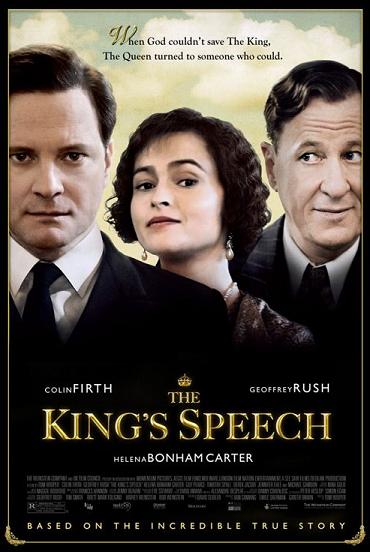
Lionel's grandson Mark Logue was consulted for the script of the movie, starring Colin Firth as the stammering King George VI and Geoffrey Rush as his elocution coach, widely tipped for Oscar glory at the Academy Awards next month.
His involvement encouraged him to return to hundreds of documents about his grandfather's inspiring story, resulting in the book "The King's Speech: How One Man Saved the British Monarchy" which he wrote with journalist Peter Conradi.
At his home in London, Mark Logue sifted through piles of letters, including several from the king to Lionel which reveal a surprising level of intimacy between the king and, to use Lionel's own words, a "common colonial."
An appointment card covered with Lionel's tiny writing shows how the future king visited his Harley Street practice 82 times between October 1926 and December 1927, and describes the royal's "very flabby" waist as well as his speech impediment.
A scrapbook of press cuttings, photographs of Lionel and his wife Myrtle at King George VI's coronation, Christmas cards from the royal family and Lionel's own diary attest to his pride at having helped the monarch through his tumultuous reign.
But Lionel also had a sense of being someone from another country and another class.
"Here we've got a man in his mid-40s, emigrating from Australia with his young family and setting up in the heart of the British medical establishment in Harley Street, very much an outsider," Mark Logue said in an interview.
"Within two years he's treating the king's son. Then he's kind of catapulted into the center of the royal family when he (the Duke of York) becomes king.
"All the time I think he's had this sense that he's an outsider, but also proud of it. He says in his diaries, frequently, that the king sought his advice ... as a commoner -- what does a common man on the street think," he added.
Showing posts with label The King's Speech. Show all posts
The King's Speech
Among tried-and-true formulas for an effective, Oscar-candidate movie, the most reliable often concern either the activities of an ordinary person facing extraordinary circumstances or those of an extraordinary person challenged by the ordinary. Like The Queen before it, The King's Speech, a stately, carefully crafted specimen of a satisfying formula movie well positioned for the awards attention being heaped upon it, opts for the second variation and grounds the emotional drama in historical fact. In a performance of nuance and soul that would be more astonishing only if we hadn't become almost spoiled by expecting such quality from him, Colin Firth plays Prince Albert, who suddenly became Great Britain's King George VI when his older brother, King Edward VIII, abdicated the throne in 1936. King George was royalty, true. But he was also a private man whom his family called Bertie — and Bertie had a debilitating speech impediment that tormented him for much of his life. Even a king can have a common stutter, this sturdy backstairs-at-the-palace drama assures. Even a king could do with some trusted help. Even a king must find his own voice.
In this monarch's case, unlikely help arrived in the person of Lionel Logue (Geoffrey Rush), a highly unorthodox, self-taught Australian speech therapist who ended up as much in the role of an informal shrink as that of an unlicensed pathologist. The king's resourceful wife, Elizabeth (Helena Bonham Carter) — the future Queen Mother — found Logue and introduced the two. And at least as dramatized history would have it, the relationship got off to a rocky start. Firth is front and center in this intelligent crowd-pleaser, and he endows Albert-turned-George with a poignant dignity even while exposing his past as a lonely little boy who grew up stammering in the shadow of his imperious father and dashing brother. But Firth's triumph is seamlessly linked to his generous give-and-take with Rush (agile and expressive as ever) and Bonham Carter (a gentle ball of fire). The trio is grounded in turn by the well-written (if sometimes stagy) screenplay of David Seidler, a journeyman TV writer now 73 years old, who was himself a childhood stutterer. And as directed by Tom Hooper (who presided over HBO's Emmy-winning series John Adams), The King's Speech is simultaneously cozy and majestic.
It's also, truth to tell, a little square. The title carries a double meaning: The king's speech itself is trapped inside the stuttering man and needs coaxing by Logue to emerge. And also, the movie climaxes with the fateful speech King George made to his subjects, rallying them on the eve of World War II. Lest the audience miss a cue, Hooper and soundtrack composer Alexandre Desplat count on the ringing grandeur of Beethoven's Seventh Symphony — the famous second movement, no less — to amp the emotions. With instincts like these, Oscar speeches are bound to follow.
Subscribe to:
Posts (Atom)
